Oct 14, 2026Installation & Maintenance
Large-Format Outdoor Digital Displays: Comprehensive Installation Types and Placement Strategies
Guide to large-format outdoor digital displays: explore installation types from freestanding totems to wall mounts and optimize site placement for high traffic.
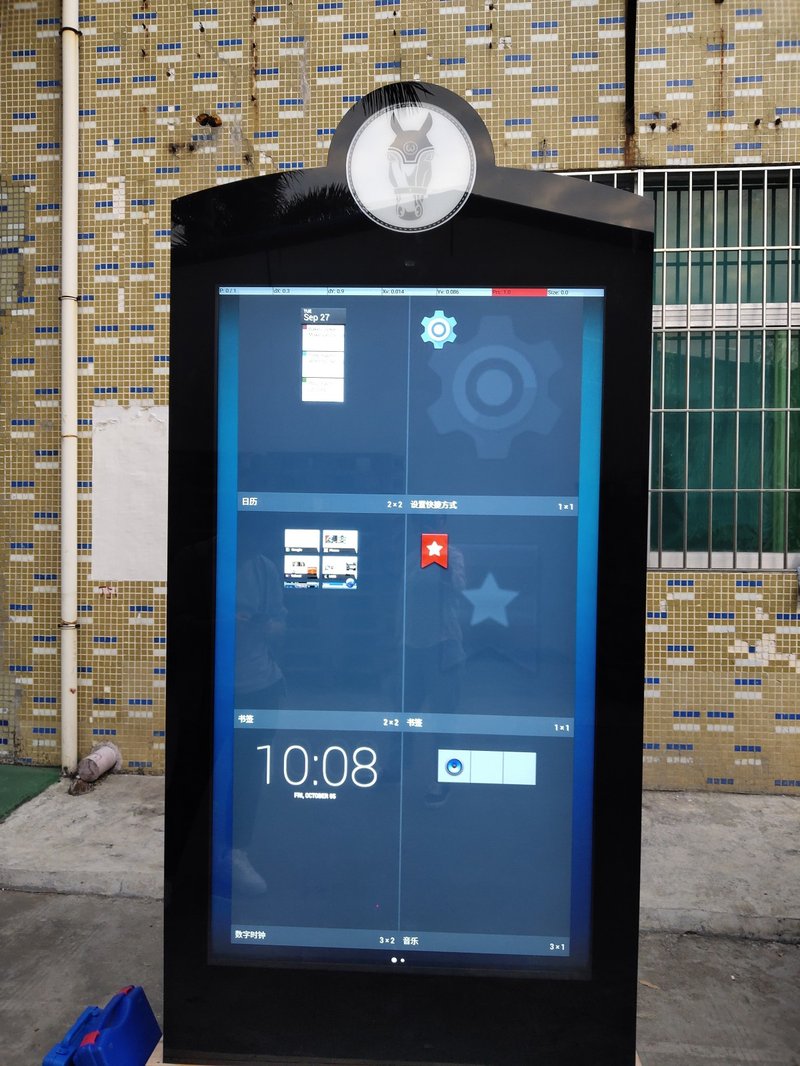
Deploying a high-performance Large-Format Outdoor Digital Display provides commercial spaces and public venues with an all-weather digital display solution. With the exponential surge in digital visual communication demands, large-format LCD advertising displays are extensively utilized across shopping malls, hotels, international airports, transit terminals, exhibition halls, corporate headquarters lobbies, and public venues.
Compared to static printed billboards, LCD advertising players dynamically display high-definition images, streaming videos, and rich multimedia content. They offer highly agile content scheduling while significantly elevating brand visual sophistication.
However, due to their expansive screen surface and substantial physical weight, large-format LCD advertising displays require carefully tailored installation solutions based on on-site conditions. Furthermore, understanding the distinct structural categories and application scenarios of digital signage is essential for optimal equipment selection.
Large-Format Outdoor Digital Display: Common Installation Methods for Large-Format LCD Advertising Displays
Before mounting large-format LCD advertising displays, project teams must systematically assess installation location, optimal viewing distances, structural wall integrity, power and network infrastructure, and maintenance access clearance.
Different architectural settings dictate distinct mounting solutions:
1. Floor-Standing (Freestanding Kiosk) Installation
Floor-standing deployment is one of the most widely adopted mounting configurations for large-format LCD advertising displays.
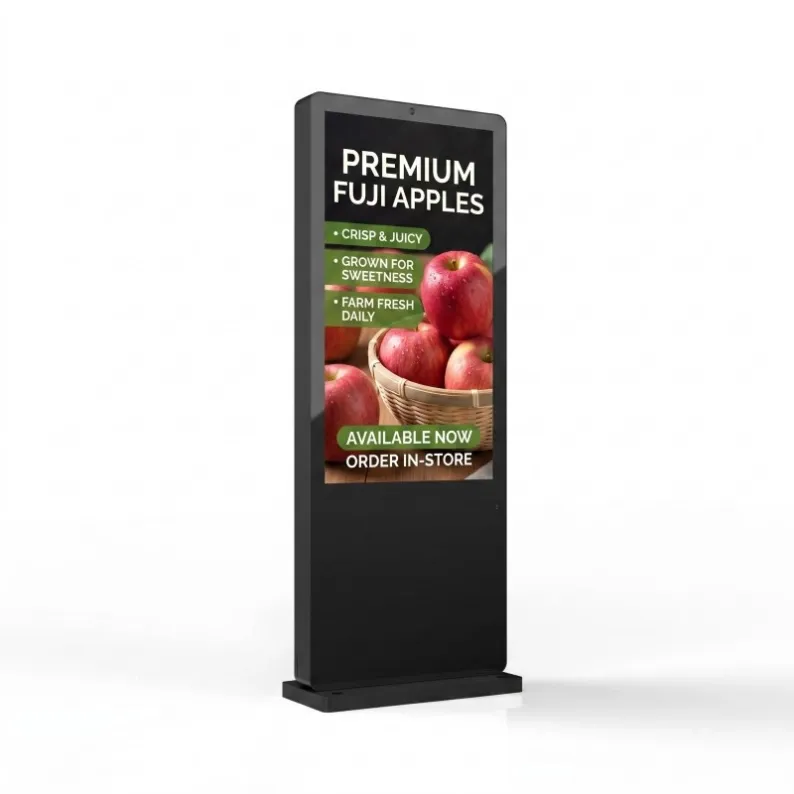
The display is supported by a weighted, heavy-duty base plate or dedicated floor stand positioned directly on the floor. Offering an intuitive and straightforward setup, it is ideally suited for spacious venues such as shopping mall atriums, hotel lobbies, exhibition pavilions, and airport arrival halls.
The key advantages of floor-standing deployment include ease of relocation and convenient maintenance access, allowing operators to adjust positioning as space layouts evolve.
However, for large-format displays, base plate stability and ballast weighting are critical to prevent tipping or wobbling from pedestrian contact.
2. Wall-Mounted Installation
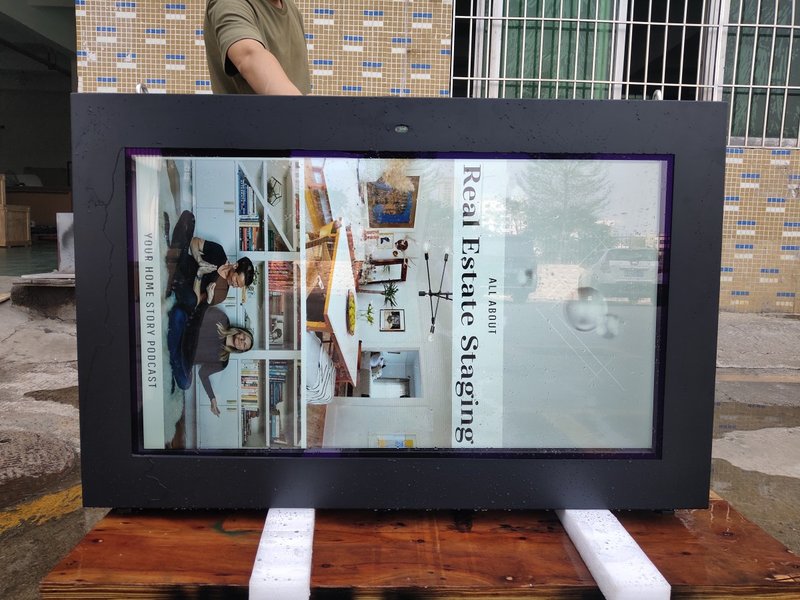
Wall-mounted installation utilizes vertical wall space to secure the advertising display, completely eliminating ground footprint.
This approach is optimal for corporate reception foyers, shopping center corridors, retail storefront facades, and public transit walkways.
Prior to mounting, verify the load-bearing integrity of the structural wall and select heavy-duty commercial wall brackets precisely matched to the display's screen size and weight.
For large-format units such as 85-inch or 98-inch commercial displays, wall structural strength and bracket fatigue ratings are paramount. If the wall consists of lightweight partition materials, internal structural reinforcement must be engineered beforehand.
3. Recessed (In-Wall Flush) Installation
Recessed installation integrates the LCD display seamlessly into architectural wall niches, custom millwork, or purpose-built display cabinetry.
This approach creates a flush, minimalist visual aesthetic that blends harmoniously into the surrounding interior architecture.
Recessed mounting is predominantly deployed in luxury brand flagships, museum galleries, smart showroom environments, and high-end executive venues.
Crucially, installation planning must proactively incorporate exact chassis dimensions, active thermal ventilation airflow channels, and front-service access mechanisms to prevent servicing difficulties down the road.
4. Mobile Trolley Cart Installation
Certain large-format LCD advertising displays and interactive touch displays are mounted on mobile trolley carts equipped with heavy-duty locking casters.
This enables displays to be smoothly relocated across different rooms and functional areas based on operational needs.
This setup is ideal for enterprise conferences, trade exhibitions, roadshows, and temporary marketing campaigns.
While offering unmatched mobility and flexibility, operators must ensure the mobile trolley's rated payload capacity and wheel-lock stability satisfy safety standards.
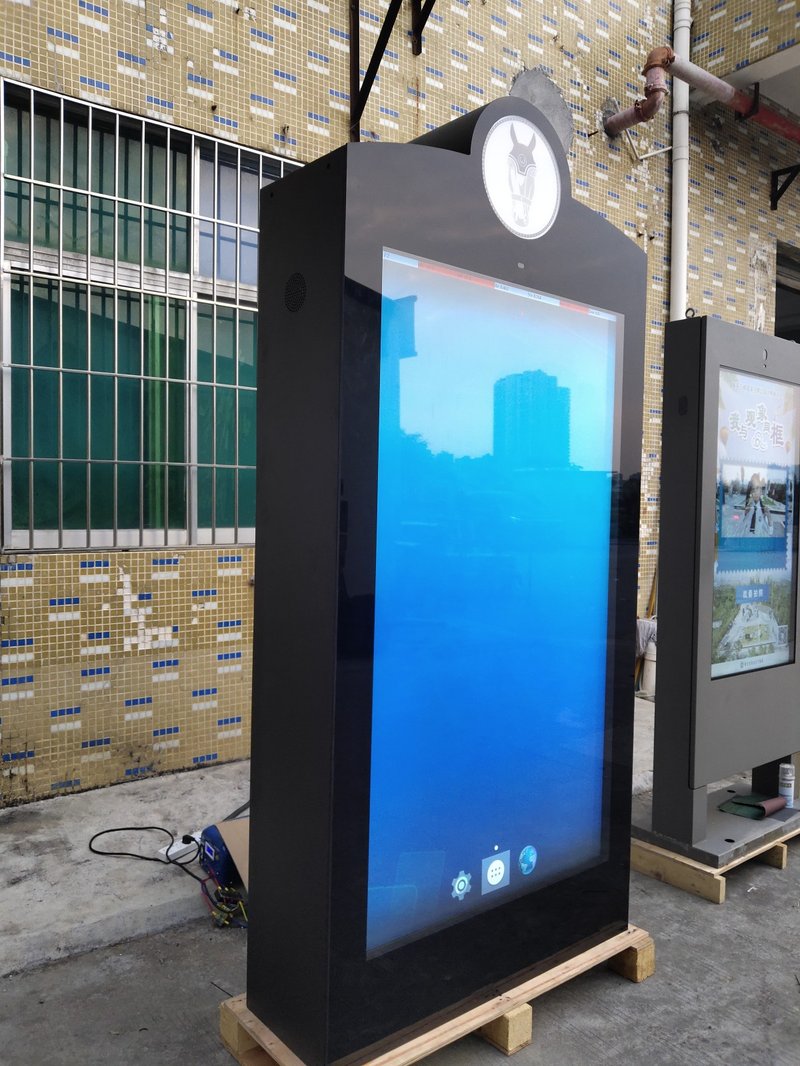
What Are the Common Types of LCD Advertising Displays?
Based on physical form factor, operational orientation, and application environment, LCD advertising players are categorized into several primary types:
1. Floor-Standing Vertical (Portrait) Advertising Kiosks
Vertical floor-standing kiosks are among the most prevalent digital signage fixtures in commercial spaces.
Typically positioned independently on the floor, they showcase multimedia content in a commanding portrait format.
Common application scenarios include:
Shopping mall entrance vestibules;
Hotel concierge lobbies;
Restaurant and dining storefronts;
Exhibition and conference halls;
Airports and railway terminals.
Vertical kiosks occupy minimal ground footprint while offering commanding eye-level sightlines.
2. Wall-Mounted LCD Advertising Displays
Wall-mounted digital signage is fastened directly to walls or architectural structural columns.
By freeing up valuable floor space, it is exceptionally well-suited for high-density traffic areas with constrained floor footprints.
Widely deployed in:
Elevator lift lobbies;
Retail concourses;
Corporate workplace corridors;
Public administrative service centers.
3. Double-Sided LCD Advertising Displays
Double-sided displays integrate LCD panels on both the front and rear faces of a single enclosure, simultaneously broadcasting synchronized or independent content in opposing directions.
These displays are ideal for high-traffic pedestrian corridors, central shopping mall concourses, and transit transfer terminals, effectively doubling advertising reach and visual impressions.
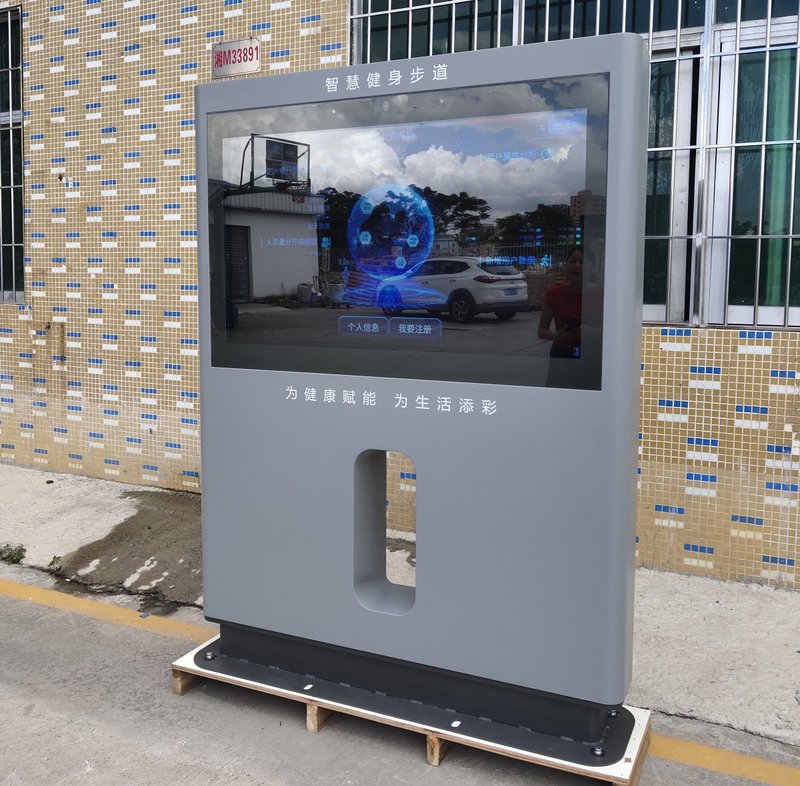
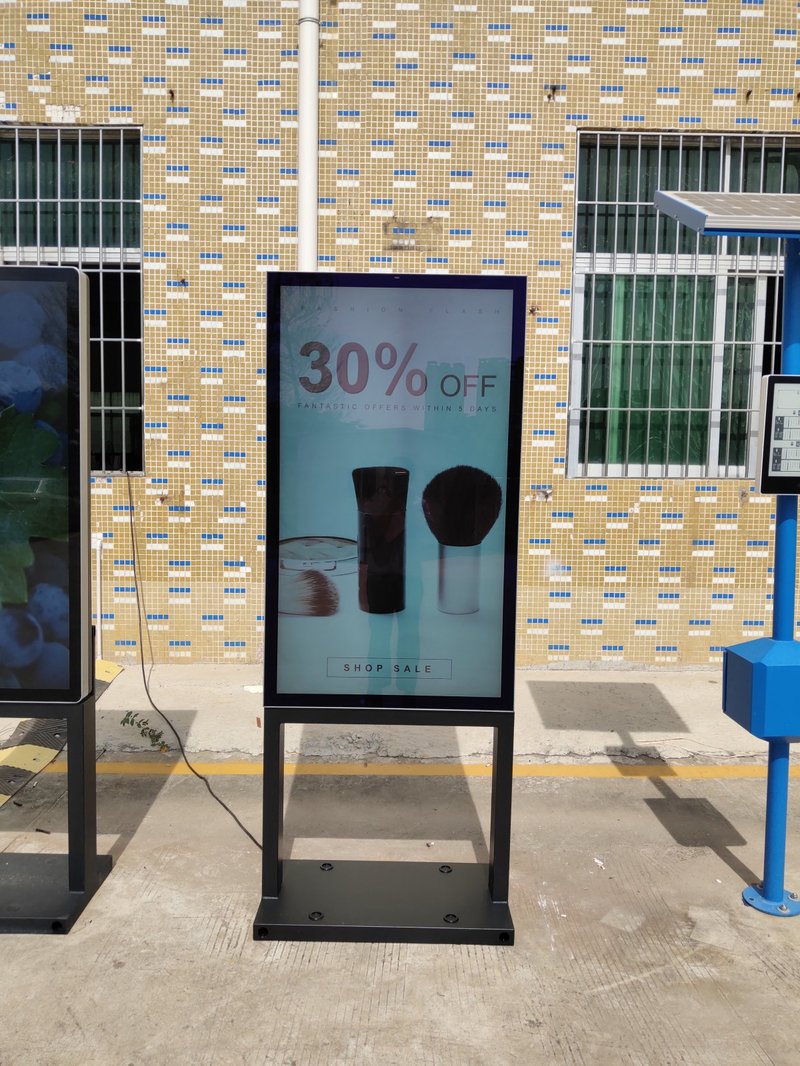
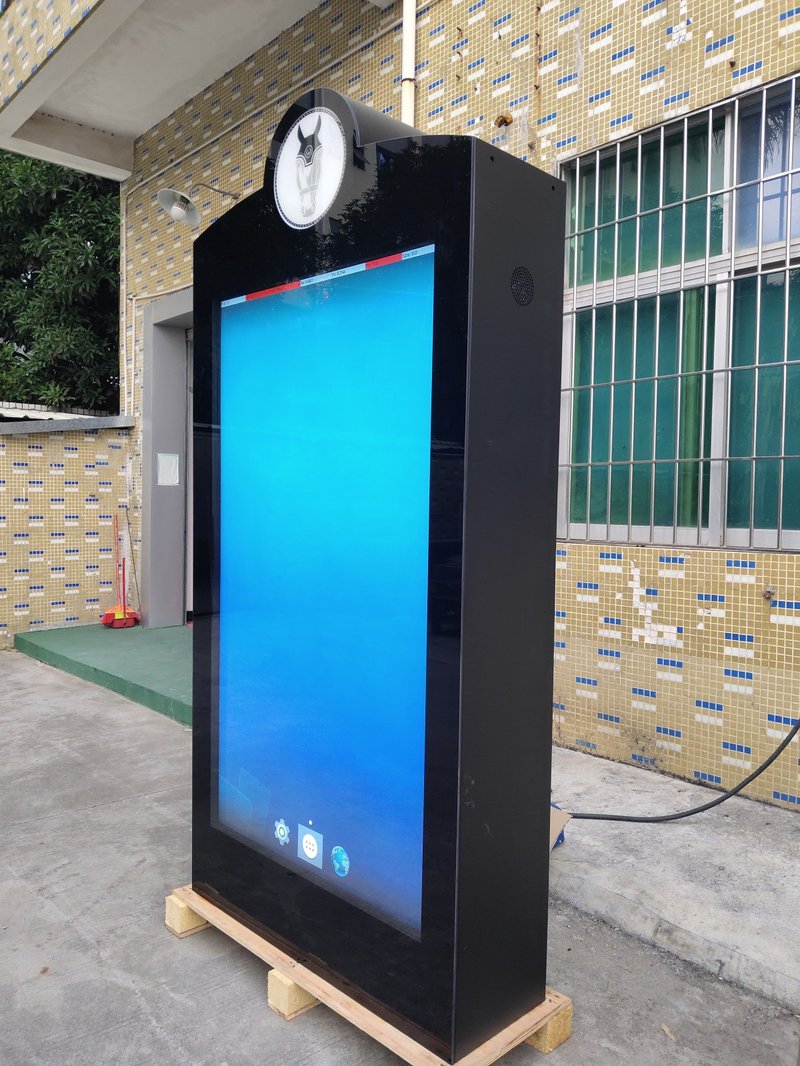
4. Outdoor LCD Digital Signage Kiosks
Outdoor LCD advertising kiosks are purpose-built for harsh open-air environments.
Compared to indoor commercial screens, they incorporate heavy-duty ingress protection and advanced environmental resilience engineering.
Common deployments:
Commercial pedestrian avenues;
Public civic plazas;
Scenic tourist attractions;
Outdoor parking structures;
Smart bus shelter stops.
Outdoor hardware prioritizes daylight-readable ultra-high brightness (up to 2500+ nits), IP65 waterproof and dustproof sealing, intelligent thermal management (air cooling or air conditioning), and uninterrupted 24/7 all-weather stability.
5. Interactive Touch Digital Signage Kiosks
Interactive touch kiosks augment standard digital displays with responsive multi-touch capabilities (infrared or capacitive PCAP touch).
Users can intuitively touch the screen to query directories, navigate floor plans, browse product catalogs, or perform self-service checkouts.
Commonly utilized in:
Museum and showroom interactive guides;
Mall wayfinding and directory maps;
Government civic service kiosks;
Corporate showroom presentations.
Critical Considerations for Installing Large-Format LCD Advertising Displays
Beyond selecting the ideal mounting method, several crucial technical details must be observed:
First, verify that the structural foundation or mounting surface fully meets the dynamic and static load-bearing requirements of the display.
Second, strategically plan electrical power supply routing and network cabling in advance to avoid unsightly exposed cables or complex post-installation rewiring.
Third, guarantee adequate thermal ventilation clearance surrounding the chassis to maintain optimal operating temperatures during prolonged continuous commercial usage.
Finally, when deploying displays in crowded pedestrian zones, implement mechanical safety locks and tamper-resistant fasteners to safeguard against accidental impacts and unauthorized tampering.
FAQ
Q1: Can large-format LCD advertising displays be installed by non-professionals?
While smaller, lightweight displays can occasionally be self-installed, large-format commercial displays involve substantial hardware weight, structural safety anchoring, precision alignment, and complex electrical wiring. Professional installation teams are strongly recommended.
Q2: Can screens 85 inches and larger be wall-mounted safely?
Yes, provided that the wall's structural load-bearing capacity is thoroughly verified and commercial-grade heavy-duty mounting brackets engineered for the specific payload are utilized.
Q3: What are the primary structural classifications of LCD digital signage?
The primary types include floor-standing portrait kiosks, wall-mounted displays, double-sided displays, outdoor all-weather kiosks, and interactive touch kiosks.
Q4: What are the decisive factors when choosing a mounting configuration for digital signage?
Selection depends on on-site architectural conditions, spatial dimensions, viewer sightlines and distances, display hardware specifications, and long-term maintenance accessibility. In conclusion, selecting a professional Large-Format Outdoor Digital Display guarantees long-term operational stability, superior sunlight readability, and maximum commercial impact.
Looking for customized Large-Format Outdoor Digital Display solutions, high-brightness outdoor digital signage kiosks, or weatherproof commercial displays? Feel free to contact the ZXTLCD engineering team for detailed technical specifications, mounting drawings, and volume pricing.