Oct 14, 2026Installation & Maintenance
The Outdoor Advertising Kiosk Deployment Lifecycle: From Site Survey to On-Site Commissioning
The outdoor advertising kiosk deployment lifecycle: comprehensive steps from site survey and foundation pouring to electrical wiring and CMS commissioning.
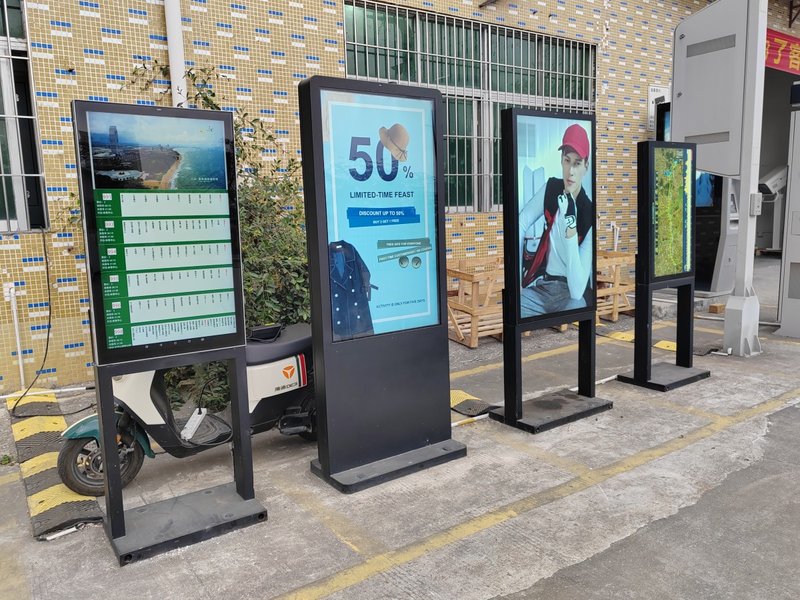
Deploying a high-performance Outdoor Advertising Kiosk Deployment Lifecycle provides commercial spaces and public venues with an all-weather digital display solution. Unlike conventional indoor advertising equipment, installing outdoor advertising kiosks requires considering not only display performance but also the long-term operational environment.
Once installed, the equipment must withstand direct sunlight, rain, dust, temperature fluctuations, and wind loads. If upfront planning is insufficient, issues such as unstable mounting, difficult wiring maintenance, and poor heat dissipation may arise during later operation.
Therefore, a comprehensive installation workflow for outdoor advertising kiosks must start with a thorough site survey, determine the installation plan according to the actual environment, and then proceed through foundation construction, equipment mounting, and subsequent commissioning.
Outdoor Advertising Kiosk Deployment Lifecycle: Pre-Installation Site Survey
Before installing an outdoor advertising kiosk, the installation location must first be confirmed.
Different locations impose distinct requirements on the kiosks. For example, areas such as commercial pedestrian streets and shopping mall entrances prioritize visual impact and foot traffic coverage. Conversely, roadside locations and industrial park entrances require greater emphasis on structural fastening and wind resistance.
During the site survey, engineers must assess the space dimensions of the installation area, viewing distances, sunlight angles, power supply availability, network conditions, and clearance for future maintenance.
If the installation location is exposed to prolonged direct sunlight, the screen's sunlight readability must be addressed. If the area is prone to heavy rainfall, verification is required to ensure that the equipment's ingress protection (IP rating) meets operational requirements.
Selecting the Installation Method Based on the Application Scenario
Common installation methods for outdoor advertising kiosks include floor-standing (freestanding), wall-mounted, pole-mounted (pylon), and embedded (recessed) installations.
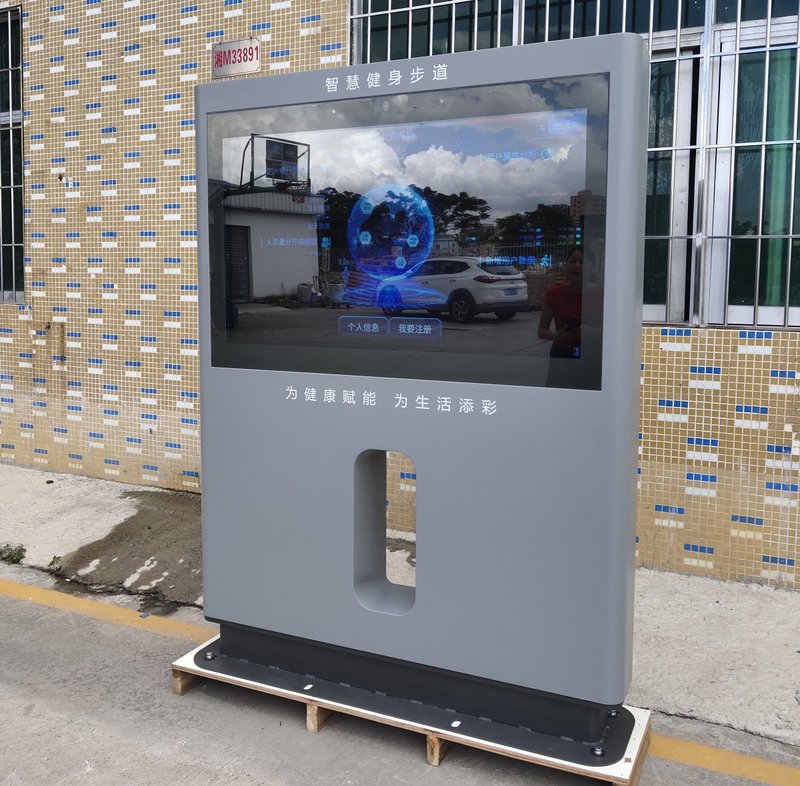
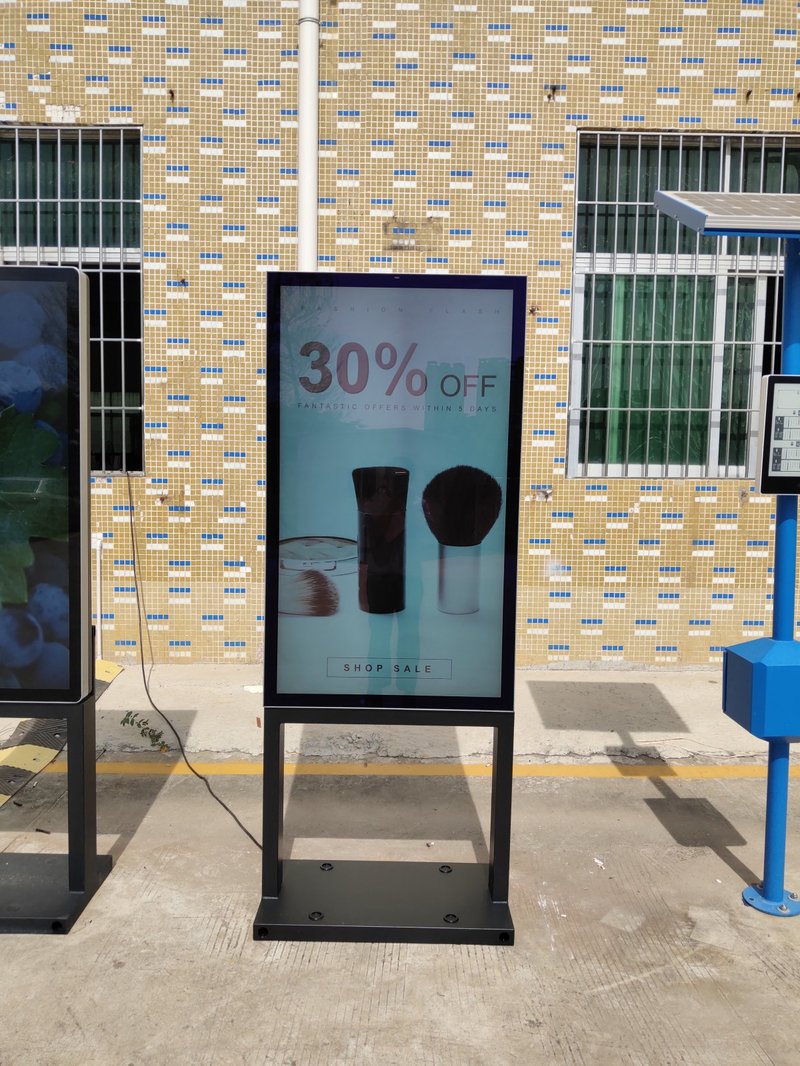
Floor-standing installation is currently one of the most widely used methods, ideal for open areas such as commercial plazas, shopping center perimeters, and hotel entrances. Secured to the ground via a base plate and foundation structure, the kiosk achieves optimal viewing height and presence.
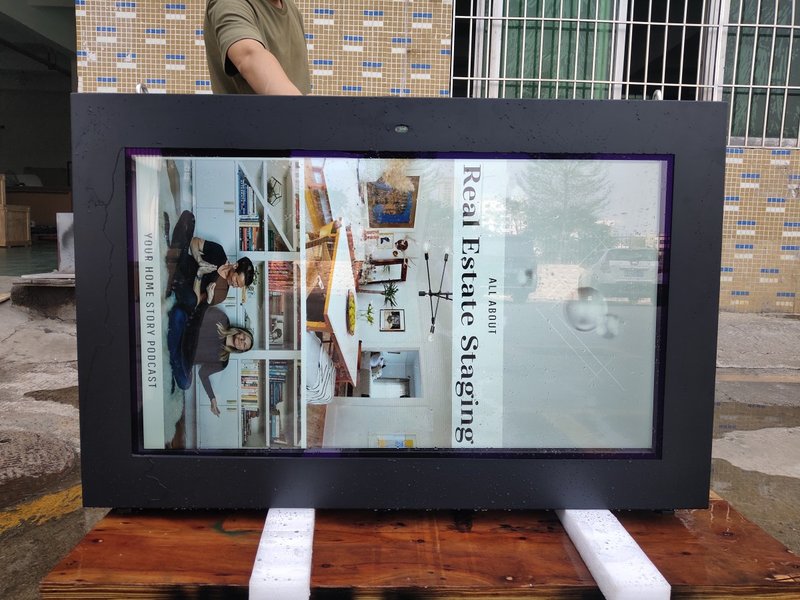
Wall-mounted installation is primarily used where ample vertical wall space is available, such as building facades, storefront entrances, and public corridors. Prior to installation, the load-bearing capacity of the wall must be verified to select appropriate heavy-duty mounting brackets.
Pole-mounted installation is typically deployed along roadsides, parking lots, and park entrances. By elevating the installation height, it enhances long-distance visibility, though it places higher demands on foundation engineering and structural fastening.
Embedded installation is more frequently utilized in custom architectural projects, integrating the display directly into walls or bespoke exhibition structures to deliver a sleek, unified aesthetic. However, this approach requires advance planning for cabinet dimensions, ventilation/cooling clearance, and service access.
Foundation Construction Determines Equipment Stability
For large outdoor advertising kiosks, foundation engineering is a critical phase of the installation process.
Floor-standing units typically require a reinforced concrete foundation, secured using embedded anchor bolts or expansion fasteners. The foundation's dimensions, horizontal leveling, and mounting hole positions all directly dictate the final installation quality.
If ground conditions at the site are poor—such as loose soil or susceptibility to water accumulation—the foundation design must be adapted to the specific soil mechanics.
Issues such as equipment tilting or wobbling post-installation often stem from inadequate foundation construction. Therefore, executing sound foundational design beforehand is far more effective than performing corrective maintenance later.
Equipment Installation and Cable Routing
Once the foundation is cured and ready, equipment mounting can proceed.
Upon arrival at the site, the unit must first be inspected for external transit damage, screen integrity, and complete accessory inventory prior to mounting.
During installation, particular care must be taken to protect the display panel against impact or mechanical stress. Fasteners must be tightened to specified torque ratings to ensure zero loosening during prolonged outdoor exposure.
Power and network cabling also require meticulous advance routing. Outdoor cabling must be properly armored or run through protective conduits to guard against moisture, UV degradation, rodent damage, or mechanical wear.
If the project involves centralized management across multiple kiosks, network topology should be pre-planned to ensure seamless remote operation.
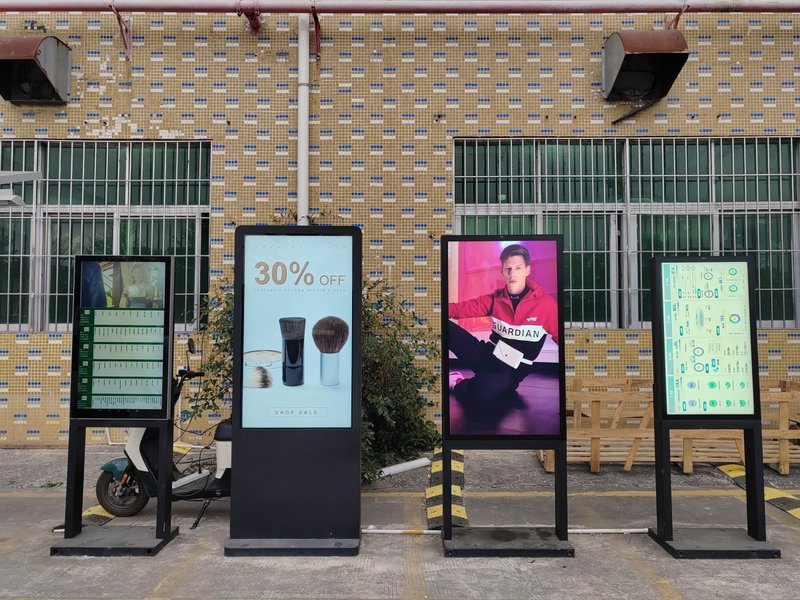
Post-Installation Commissioning and Testing
Outdoor advertising kiosks cannot be put into commercial service immediately after mechanical assembly; comprehensive commissioning is mandatory.
First, inspect display performance, including peak brightness, image clarity, color uniformity, and playback stability under load.
Next, verify media playback systems, network connectivity, and remote content management capabilities. If the unit features interactive touch functionality, test touch responsiveness and calibration accuracy across the entire active area.
For outdoor installations, performance should be monitored across various times of day, particularly under intense midday sunlight, to verify readability and ambient light sensor adjustments.
Long-Term Maintenance Is Equally Vital
Outdoor advertising kiosks are built for continuous, long-term commercial operation; completing the installation does not mean the work is done.
During daily operation, scheduled inspections are necessary to check operating status, clean accumulated dust and grime from the glass surface, and inspect cable terminations.
For units installed in high-density pedestrian areas, physical mounting integrity should be monitored regularly to mitigate risks from external impacts or vibration.
For multi-screen digital signage networks, centralized remote monitoring tools should be leveraged to track device health, enabling timely detection of playback anomalies, high internal temperatures, or network drops.
FAQ
Q1: What preparations are required prior to installing an outdoor advertising kiosk?
It is essential to confirm the installation location, power supply, network access, ground foundation conditions, and maintenance clearance, and to select the optimal installation method tailored to the site environment.
Q2: Does an outdoor advertising kiosk always require a concrete foundation?
Not necessarily; it depends on the unit dimensions, mounting configuration, and existing ground conditions. However, large floor-standing kiosks generally require a dedicated reinforced concrete foundation.
Q3: Why is commissioning required after installing an outdoor advertising kiosk?
Commissioning verifies display quality, media playback, network communication, and overall system stability, allowing any potential installation defects or operational glitches to be resolved before full deployment.
Q4: How should an outdoor advertising kiosk be maintained after installation?
Routine maintenance involves periodic operational health checks, protective glass cleaning, cable and fastener inspections, and internal filter/fan checks to ensure prolonged, trouble-free operation. In conclusion, selecting a professional Outdoor Advertising Kiosk Deployment Lifecycle guarantees long-term operational stability, superior sunlight readability, and maximum commercial impact.
Looking for customized Outdoor Advertising Kiosk Deployment Lifecycle solutions, high-brightness outdoor digital signage kiosks, or weatherproof commercial displays? Feel free to contact the ZXTLCD engineering team for detailed technical specifications, mounting drawings, and volume pricing.