Oct 14, 2026Installation & Maintenance
Versatile Outdoor Signage Mounting Solutions: Adapting Kiosks to Diverse Public Environments
Explore versatile outdoor signage mounting solutions: adapt digital advertising kiosks to bus shelters, commercial plazas, building facades, and parks.
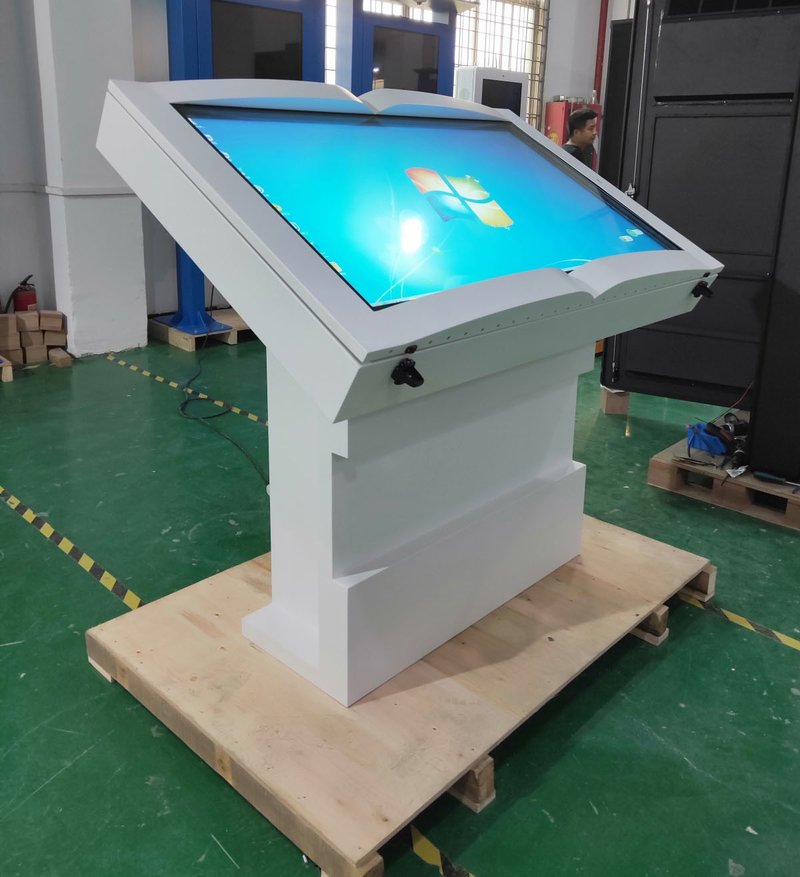
Deploying a high-performance Versatile Outdoor Signage Mounting Solutions provides commercial spaces and public venues with an all-weather digital display solution. Outdoor digital signage kiosks are extensively deployed across commercial pedestrian streets, shopping complexes, public transit stations, luxury hotels, tourist attractions, academic campuses, and civic service hubs. Diverse application scenarios impose distinct requirements on mounting locations, viewer distances, spatial layouts, and operational environments, driving the evolution of increasingly diversified installation methodologies.
A well-engineered mounting configuration not only maximizes visual impact and advertising effectiveness, but also critically determines ongoing maintenance efficiency, cable routing safety, and long-term hardware reliability. When choosing an installation configuration, project managers must carefully balance on-site architectural conditions with strategic display objectives.
Versatile Outdoor Signage Mounting Solutions: 1. Floor-Standing (Freestanding Kiosk) Installation: Optimal for High-Traffic Pedestrian Zones
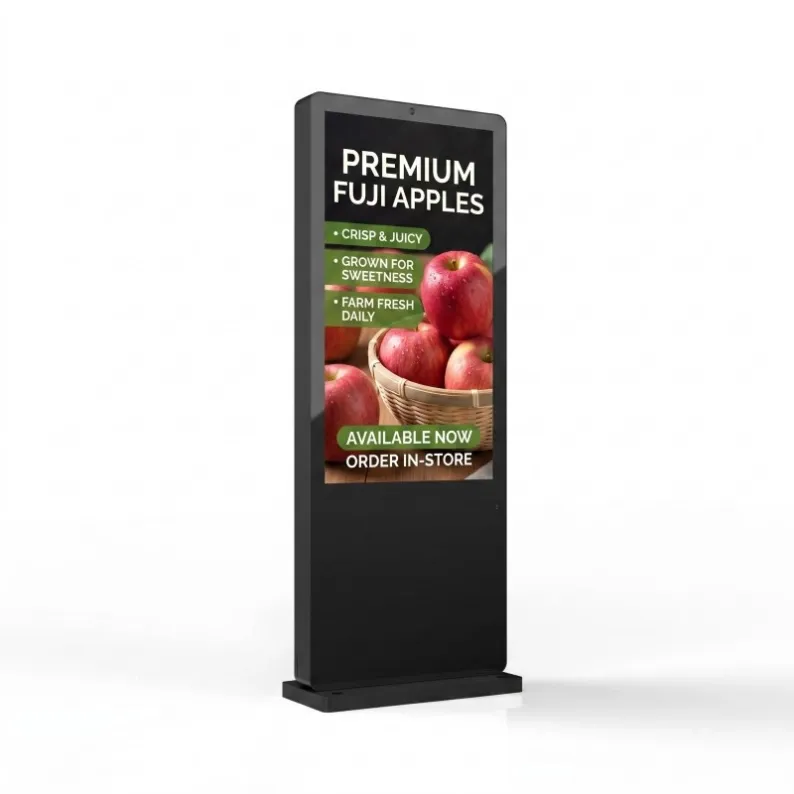
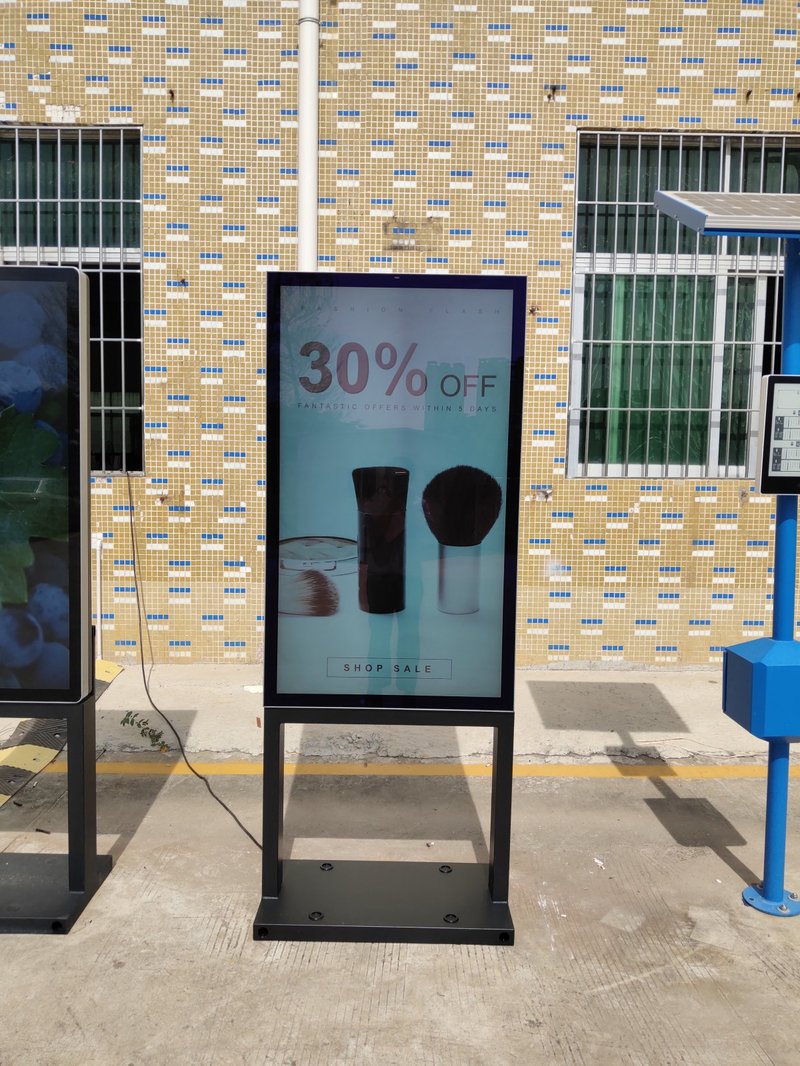
Floor-standing installation is one of the most prominent deployment methods for outdoor digital signage, where the kiosk is anchored directly to a concrete ground foundation or a dedicated heavy-duty structural base plate.
This configuration delivers an imposing eye-level visual presence, making it ideal for commercial pedestrian avenue entrances, open civic plazas, transit interchanges, hotel entryways, and shopping mall exterior walkways. Standing independently, the display offers direct, unobstructed viewing angles that immediately captivate passing foot traffic.
When engineering a floor-standing outdoor kiosk, advance considerations must include ground structural bearing capacity, foundation anchoring methods, and surrounding pedestrian clearance. Concurrently, environmental factors such as wind load resistance, heavy rain deflection, and underground conduit cable protection are critical design priorities.
2. Wall-Mounted Installation: Conserving Footprint and Enhancing Visual Presence
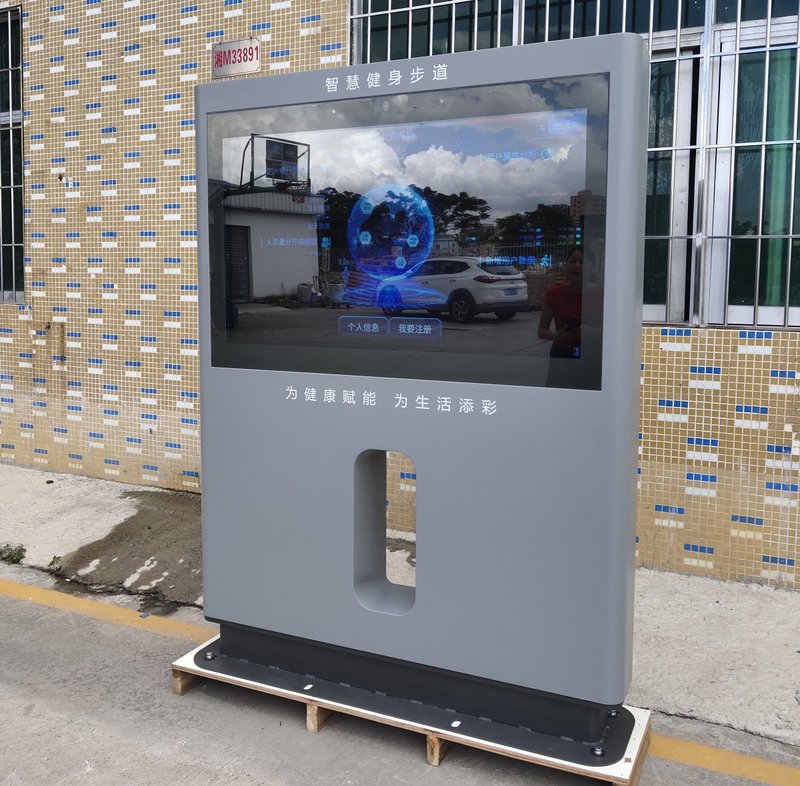
Wall-mounted installation secures the digital display directly to building exterior facades, structural concrete columns, or vertical architectural surfaces, completely eliminating ground footprint.
This approach is optimal for shopping mall facades, retail storefront entrances, building concourses, and covered public corridors. By mounting the display flush or semi-flush against architectural walls, the hardware harmonizes with the building exterior while maintaining commanding eye-level sightlines.
Before mounting, engineers must verify that the structural wall can safely bear the sustained cantilever weight of the commercial display, and plan power and data conduit routing cleanly. For long-term outdoor operation, verify that wall positioning does not restrict thermal ventilation louvers or impede service door accessibility.
3. Recessed (In-Wall Flush) Installation: Delivering Seamless Architectural Integration
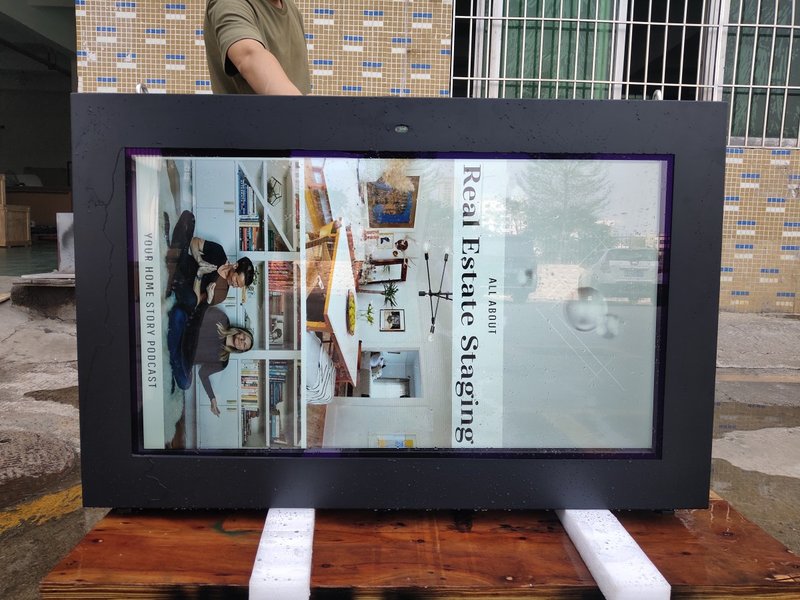
Recessed installation integrates the outdoor advertising display inside wall niches, custom stone pillars, or purpose-built architectural enclosures, creating a unified, flush facade aesthetic.
This approach is frequently specified in luxury commercial centers, smart municipal terminals, and high-end corporate headquarters. Compared to protruding standalone kiosks, recessed engineering eliminates structural bulk and yields a sleek, minimalist architectural presence.
However, recessed installations require meticulous advance engineering: exact rough-in clearances, dedicated intake and exhaust thermal ventilation plenums, waterproof flashing membranes, and front-access maintenance mechanisms must be fully resolved in the architectural plans to prevent difficult maintenance down the road.
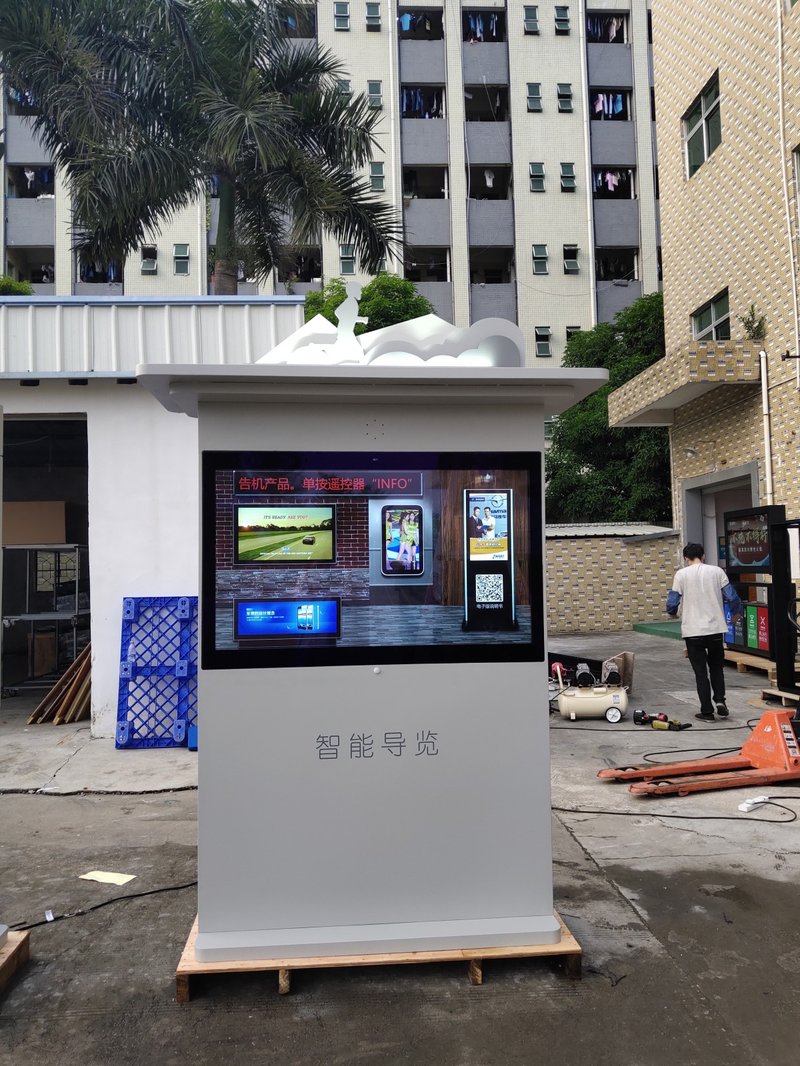
4. Pylon and Pole-Mounted Installation: Engineered for Roadways and Expansive Open Areas
Pole-mounted installation secures the outdoor digital display atop heavy-duty steel columns, pylons, or structural poles, engineered specifically for open roadways, expansive parking facilities, and corporate campus perimeter entrances.
This configuration significantly elevates the display screen, enabling content to be viewed distinctly across long distances and over vehicular traffic. Furthermore, pole structures allow fine-tuning of screen elevation and horizontal viewing angles during site commissioning.
Installation engineering must strictly calculate reinforced concrete foundation depth, sub-grade anchor bolt shear strength, aerodynamic wind resistance, and internal conduit lightning surge suppression to withstand severe outdoor storms.
5. Mobile and Portable Installation: Satisfying Dynamic, Flexible Display Demands
Certain outdoor digital displays adopt mobile trolley architectures, utilizing heavy-duty base frames equipped with locking industrial casters.
This configuration is ideal for trade exhibitions, festival campaigns, outdoor sports tournaments, and hybrid indoor-outdoor promotional venues. Displays can be rapidly repositioned according to event layouts, delivering unmatched operational agility.
When deploying mobile outdoor kiosks, operators must verify base plate ballast stability and ensure all wheel locks and stabilizing outriggers are engaged to prevent tipping hazards in crowded public environments.
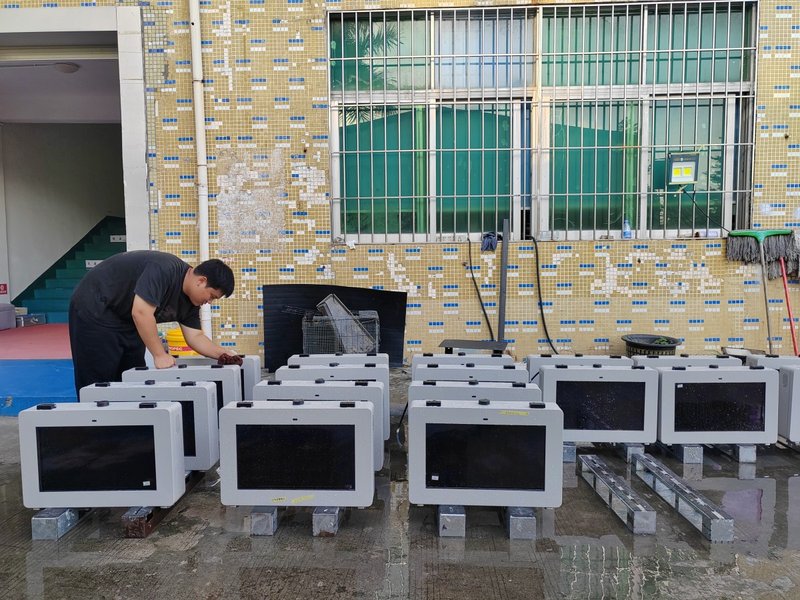
6. How to Select the Ideal Mounting Method for Diverse Scenarios
Selecting the appropriate mounting method for outdoor digital signage requires aligning functional site realities with visual communication goals:
For high-traffic open zones such as pedestrian avenues and central plazas, prioritize floor-standing kiosks or elevated pole-mounted displays to maximize visual impressions.
For space-constrained building portals or store entrances, wall-mounted displays conserve ground space while maintaining high visual engagement.
For branded flagship environments and modern smart city projects prioritizing architectural aesthetics, recessed in-wall mounting provides an elegant, integrated solution.
For temporary roadshows and rotating marketing events, mobile trolley units offer unmatched operational versatility.
In real-world implementations, decision-makers must holistically assess screen dimensions, optimal viewer sightlines, electrical supply stability, network infrastructure, environmental ingress ratings, and lifecycle service accessibility.
FAQ
Q1: Where can outdoor digital signage kiosks be deployed?
Outdoor digital signage can be deployed across a wide range of commercial and civic venues, including pedestrian commercial streets, shopping plazas, transit hubs, hotels, tourist attractions, parking facilities, and building facades.
Q2: Which is better: floor-standing or wall-mounted outdoor digital signage?
Both configurations offer distinct advantages. Floor-standing kiosks are best suited for open plazas and high-density pedestrian corridors, whereas wall-mounted displays are ideal for conserving ground footprint in space-constrained areas. Selection should be based on site-specific spatial conditions.
Q3: What critical factors must be observed during the installation of outdoor advertising displays?
Key priorities include structural foundation anchoring, safe power and network cabling, IP-rated environmental weatherproofing, adequate thermal ventilation clearances, and uninhibited maintenance access.
Q4: Can outdoor digital signage displays be used in mobile applications?
Yes. Certain outdoor displays are engineered with mobile trolley bases for temporary events and dynamic campaigns. However, operators must ensure base ballast stability and mechanical locking to guarantee public safety. In conclusion, selecting a professional Versatile Outdoor Signage Mounting Solutions guarantees long-term operational stability, superior sunlight readability, and maximum commercial impact.
Looking for customized Versatile Outdoor Signage Mounting Solutions solutions, high-brightness outdoor digital signage kiosks, or weatherproof commercial displays? Feel free to contact the ZXTLCD engineering team for detailed technical specifications, mounting drawings, and volume pricing.