Aug 20, 2026Material Notes
32-Inch Double-Sided Outdoor Ordering Kiosk for Two-Way Service Areas
A 32-inch double-sided outdoor ordering kiosk supports customers in two directions and uses fixed columns and base plates for planned outdoor installation.
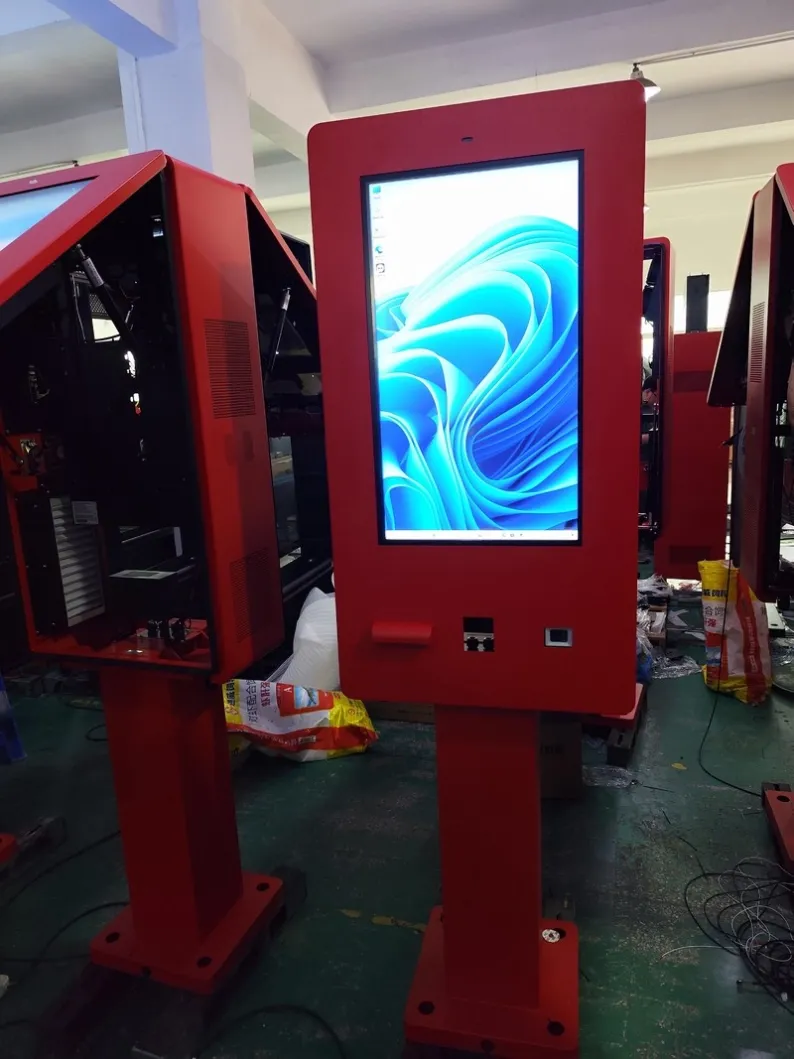
32-Inch Double-Sided Outdoor Ordering Kiosk for Two-Way Service Areas
A 32-inch double-sided outdoor ordering kiosk combines two display faces within one independent floor-standing structure, allowing the equipment to present menus, service information or interactive steps in two directions. The red enclosure creates a clearly identifiable service terminal, while the portrait screens support menu categories and sequential operating pages. Two supporting columns and base plates with mounting holes provide the structural foundation for fixing and internal cable routing.
A Double-Sided Structure Extends the Coverage of One Service Point
A single-sided ordering kiosk serves users directly in front of one screen, while the rear of the equipment normally performs no customer-facing task. A double-sided structure can provide content in two directions from one planned position. Where the site supports two queues, adjacent service zones or movement on both sides, this arrangement can improve the use of the installation point.
The two faces do not have to perform exactly the same process. According to the software architecture and customer flow, both screens can show the same menu or handle different information tasks. The project team should confirm whether users will operate both sides simultaneously, how orders will be identified and whether the screens share the same network and peripheral devices. These decisions should be made before the enclosure enters production.
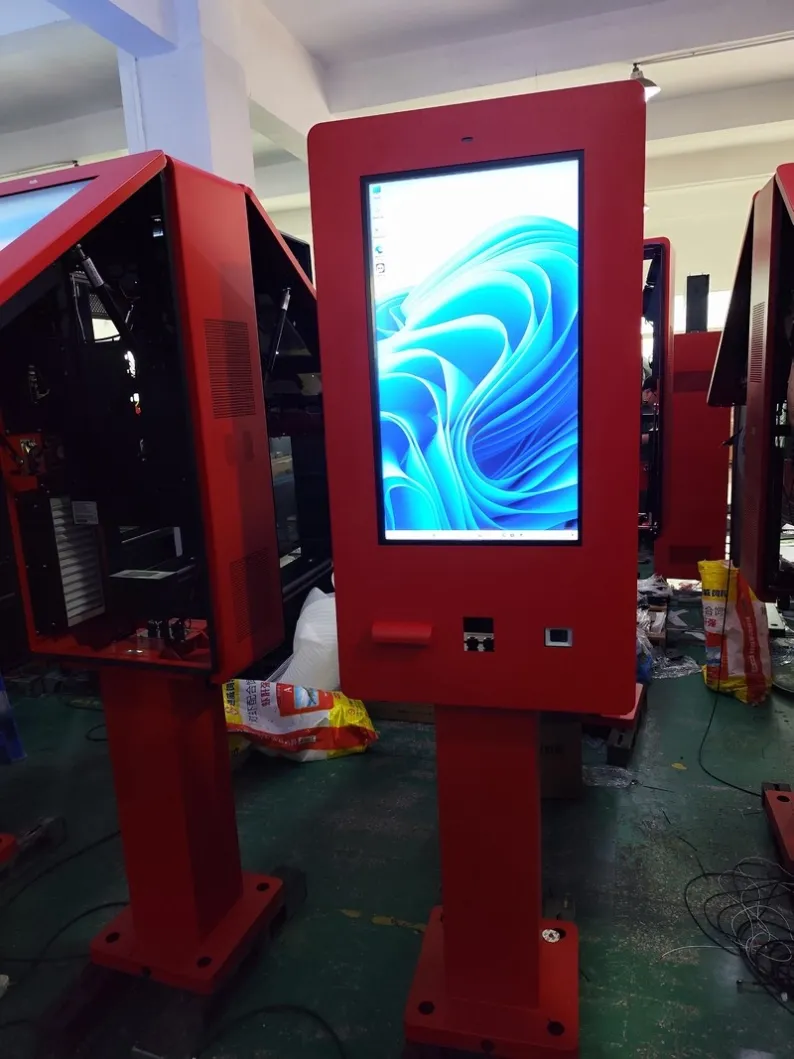
A 32-Inch Portrait Interface Supports a Continuous Ordering Process
A 32-inch portrait screen can organize menu categories, product images, options, quantities, order summaries and action buttons from top to bottom. Compared with a small terminal, it provides more room for readable text and practical touch targets while guiding customers through a multi-step self-service process.
The interface should still control the amount of information on each page. Frequently used categories and primary buttons need to remain easy to identify, while prices, specifications and additional options should follow a clear hierarchy. If the software includes payment, scanning or printing steps, the screen should direct the customer to the correct physical position on the enclosure.
Payment, Printing and Scanning Modules Require Project Confirmation
An ordering project may require a payment terminal, thermal printer, scanner, camera or another peripheral, but these components should not be treated as standard until their models and software compatibility have been confirmed. Payment devices differ between countries and service providers, while printers and scanners require suitable commands, drivers and interfaces.
The customer or software integrator should supply component dimensions and connection details before openings and internal brackets are finalized. This allows mounting positions, cables, maintenance clearance and operating height to be coordinated. If the current project only requires menu display and touch interaction, future expansion should still be considered without weakening enclosure protection through later modification.
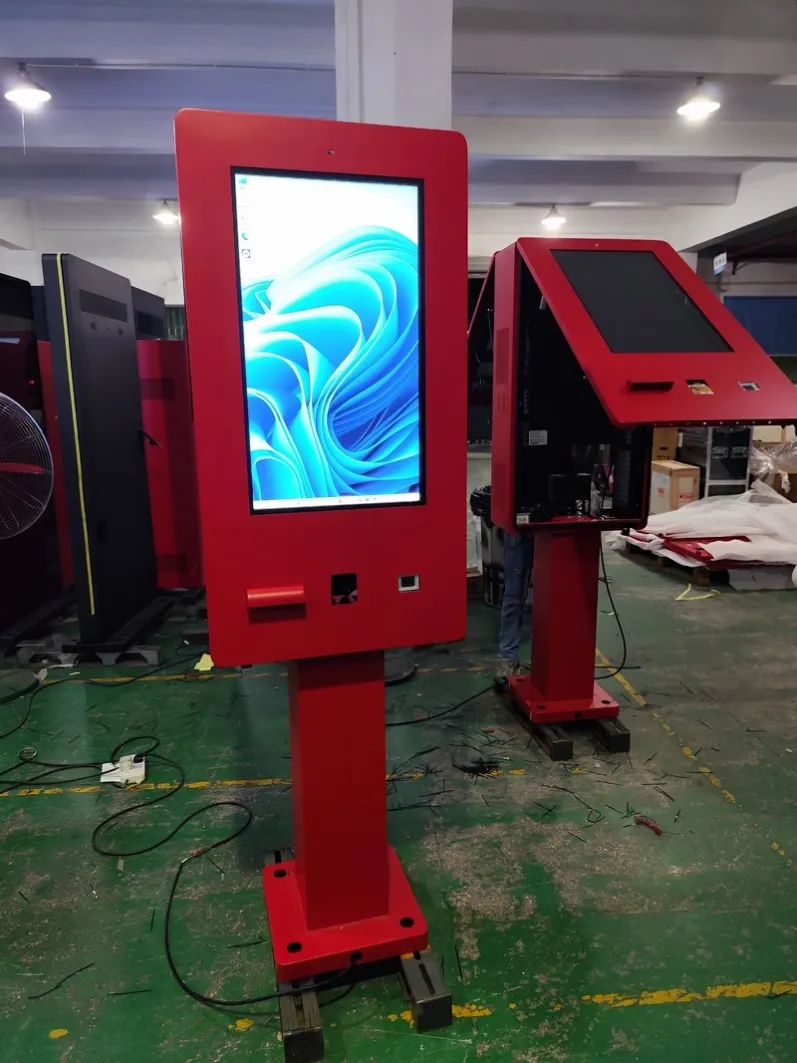
The Pedestal Base Must Be Planned for Outdoor Fixing and Cabling
The enclosure is connected to the base through two columns, and the base plates include mounting holes. During final deployment, the fixing method should reflect floor material, display orientation, public access and local wind conditions. Expansion bolts or a site-specific embedded solution may be required. An outdoor ordering kiosk should not rely only on its own weight for stability.
Power, network and internal connections for both display faces should follow planned routes through the enclosure and columns. Cables should not remain exposed across customer circulation areas. The installation position must also provide sufficient room for operation, queue organization and maintenance instead of placing the kiosk too close to another service structure.
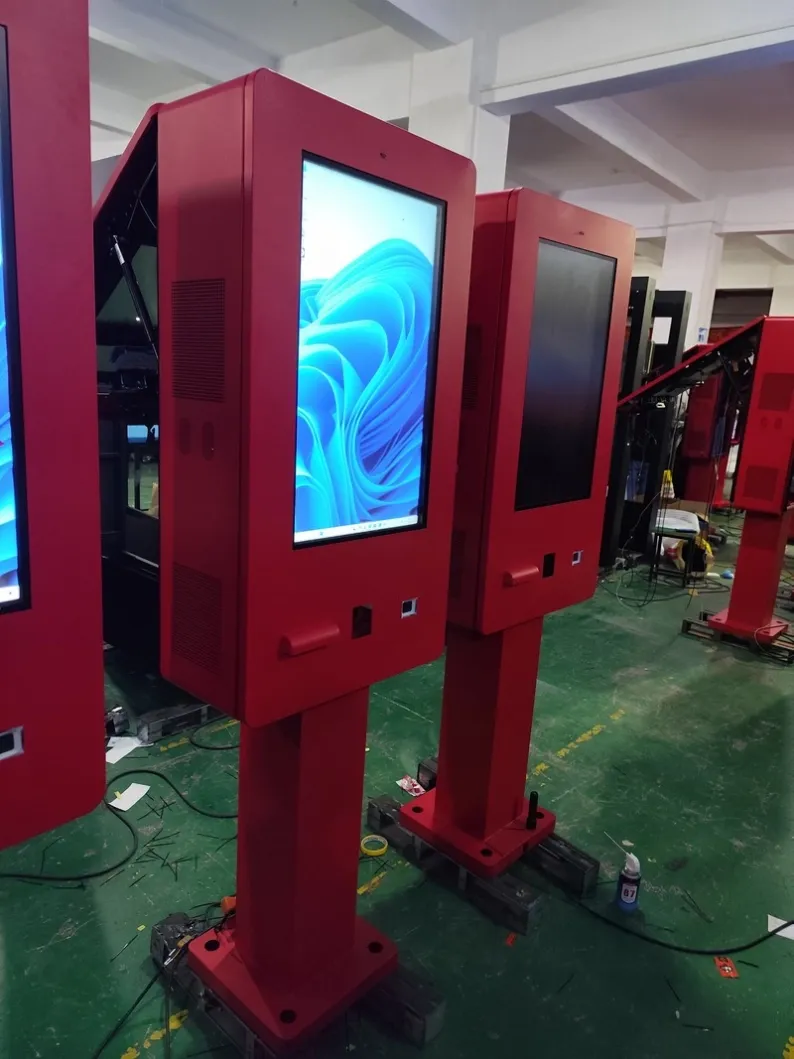
Double-Sided Equipment Needs Coordinated Cooling and Maintenance
Two display faces and the internal system share one enclosure, increasing the need to coordinate component layout, thermal management and access. Ventilation paths must remain open, while the cooling configuration should be selected according to local temperature, sunlight exposure and the approved internal hardware.
Technicians need workable access to the screens, control system, power components and optional peripherals. The installation must not block the service-door direction or force maintenance work into the main queue. The available image confirms factory assembly and testing activity, but it does not establish shipment or operation at the final site.
Two-Way Service Logic Should Be Confirmed Before Production
Before purchasing a 32-inch double-sided outdoor ordering kiosk, customers should provide the installation plan, user directions on both sides, brightness requirement, operating system, ordering software, network method and local electrical standard. Payment, printing, scanning or camera functions require specific component and software details.
ZXT LCD can coordinate the double-sided enclosure, fixed pedestal, display system and optional components around the confirmed workflow. Customers can review more outdoor self-service display solutions and submit a site layout for further configuration discussion.
If you would like to get the specification about above product, please contact our sales team now.