Aug 20, 2026Material Notes
32-Inch Dual-Screen Wall-Mounted Outdoor Display for Separate Content Tasks
A 32-inch dual-screen wall-mounted outdoor display places two screens around a central service enclosure for synchronized or independently managed content.
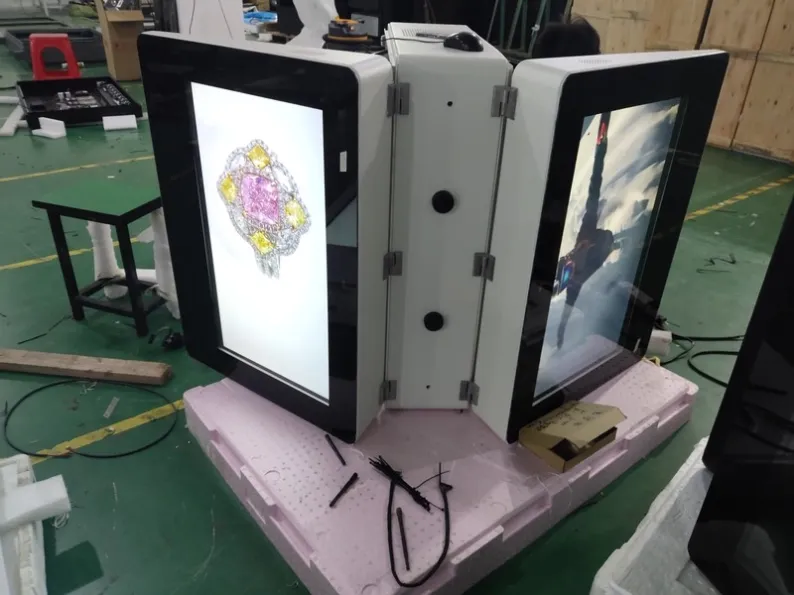
32-Inch Dual-Screen Wall-Mounted Outdoor Display for Separate Content Tasks
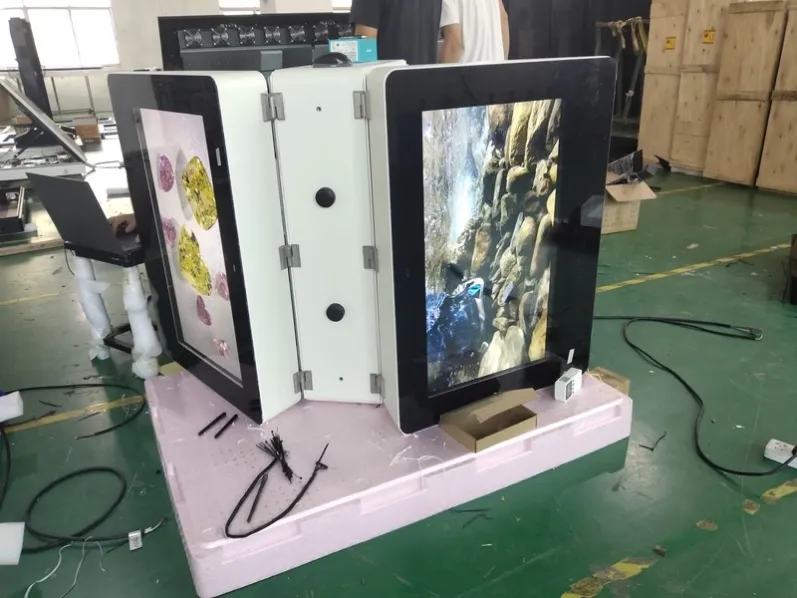
A 32-inch dual-screen wall-mounted outdoor display positions two screens on opposite sides of a central enclosure, providing an integrated structure for projects that require viewing in two directions or two defined content areas. Black display frames and a white central service body create clear functional zones. The middle door and connection structure can centralize control components, power distribution and cabling. Mounting the terminal on a verified wall or purpose-built support reduces the floor area required by a complete standing cabinet.
Two Screens Can Be Synchronized or Assigned Different Roles
The value of a dual-screen structure is not limited to adding another display surface. Both screens can play the same branded content so viewers approaching from different directions receive a consistent message. They can also be assigned separate tasks, such as promotion, directional guidance, service instructions or notices for two adjacent areas.
If the screens need different content, the control system and publishing platform must support independent output or grouped device management. The customer should confirm whether playback will be synchronized, independently scheduled or managed through separate channels. Network architecture and update responsibilities should be agreed before production so the hardware is not limited to duplicating one image after installation.
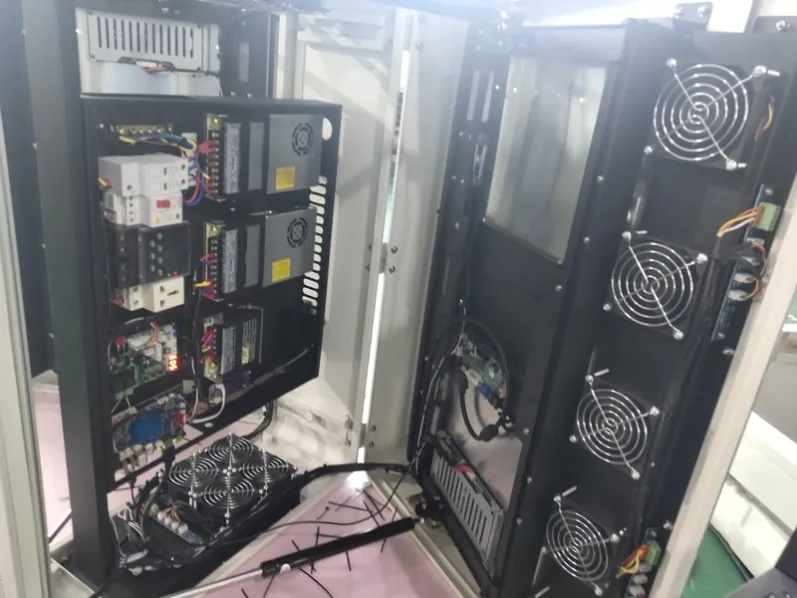
Wall Mounting Preserves Floor Space but Raises Structural Requirements
A wall-mounted terminal does not require the full footprint of a floor-standing base, leaving more room for walkways, waiting areas and nearby service equipment. At a building entrance, exterior wall, semi-open corridor or public service position, the screens can be placed at a planned height and oriented toward different viewing zones.
The wall material, supporting frame and fasteners must carry the total equipment weight and long-term operating load. Connections and anti-release measures are especially important for a dual-screen structure. A general indoor television bracket should not automatically be used for this outdoor terminal. Mounting interfaces and fixing methods need to follow a reviewed installation drawing.
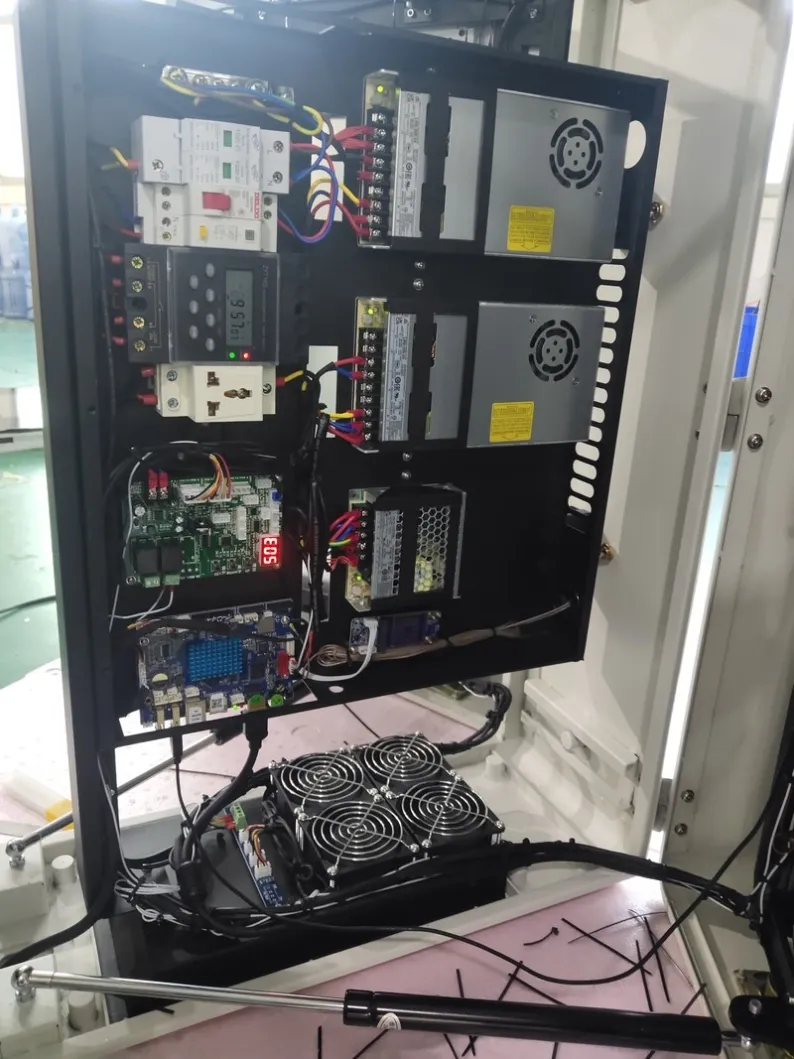
The Central Service Enclosure Needs Opening Clearance
The two display faces are joined by a central body with doors and connection hardware. The installation must reserve sufficient clearance for the door to open, components to be removed and technicians to work. Decorative surrounds, projections from the wall and adjacent equipment should not obstruct the service route.
Power, network and screen connections also need coordinated routing. Wall outlets should align with the planned enclosure entry and receive suitable sealing for the environment. Large position errors may require new openings on site, increase exposed connections and make later removal or maintenance more difficult.
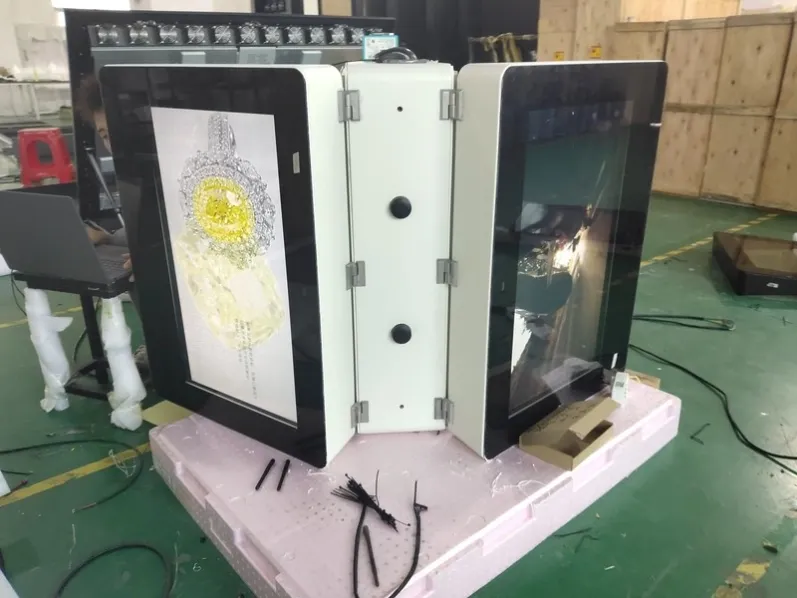
Dual-Screen Operation Requires Thermal and Brightness Evaluation
Two 32-inch screens and a central control system generate continuous heat during operation. Thermal management should reflect the maximum local temperature, duration of sunlight, mounting orientation and daily operating schedule. Adequate airflow must remain between the enclosure and the installation surface rather than being completely closed by the wall structure.
The two sides may face different lighting conditions. One screen can receive direct sunlight while the other remains shaded, creating different readability requirements. Project evaluation should consider brightness, reflection and viewing angle for each side instead of selecting the display configuration from only one direction.
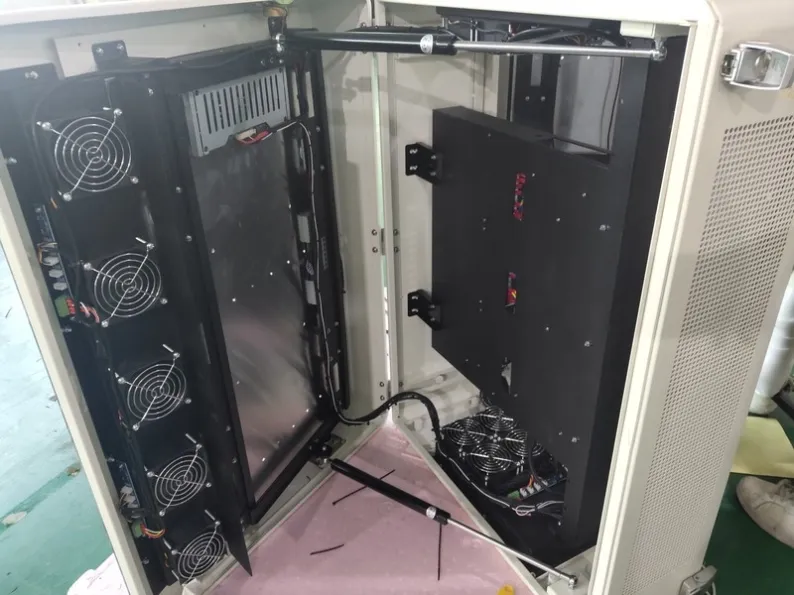
Outdoor Protection Includes Screens, Doors and Mounting Interfaces
Environmental protection depends on the complete structure. In addition to the display edges, the service doors, hinges, locks, cable entries and wall connection require suitable treatment. A terminal under a canopy faces different rain and dust exposure from equipment on an open exterior wall, so one configuration should not be assumed to suit every site.
If a rain cover or decorative frame will be added, it must not obstruct ventilation, service access or drainage. Site photographs, installation orientation and nearby structures should be provided before production. This allows environmental protection and maintenance requirements to be coordinated rather than corrected through temporary work after delivery.
Confirmed Project Information Determines the Final Capability
Before purchasing a 32-inch dual-screen wall-mounted outdoor display, customers should confirm the mounting position, viewing direction for each side, synchronized or independent content control, brightness, operating system, network method and local electrical standard. Touch, camera, audio, custom color or branded graphics should be listed as separate requirements.
ZXT LCD can coordinate the dual-screen body, central service enclosure, mounting interface, control system and pre-shipment inspection around the approved information. The available photograph represents factory assembly and does not by itself confirm shipment or on-site installation. Customers can review more outdoor LCD display solutions and discuss the actual environment with our team.
If you would like to get the specification about above product, please contact our sales team now.